A fire alarm system is only as good as its detectors. Put the wrong type in the wrong room and you get one of two problems: false alarms every week, until someone switches the system off, or a detector that reacts far too late. Choosing the right detector for each space is most of the job.
Short answer: smoke detectors for most rooms and corridors, heat detectors where smoke, steam or dust is normal, and beam detectors for big spaces with high ceilings.
Smoke detectors: the default
Most fires make smoke well before they make much heat, so a smoke detector gives the earliest warning. It is the right choice for offices, bedrooms in hotels and hostels, corridors, stairs, stores and electrical rooms. Ask us for smoke detectors to match your panel.
Heat detectors: where smoke detectors would cry wolf
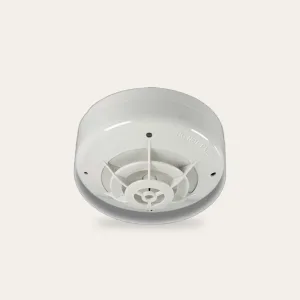
A heat detector ignores smoke and steam and reacts to temperature. Use one in:
- Kitchens and canteens.
- Generator, boiler and pump rooms.
- Car parks, where exhaust fumes would set off a smoke detector.
- Dusty production areas, such as cutting sections and spinning.
- Laundries and anywhere with steam.
There are two kinds. Rate-of-rise detectors react when the temperature climbs unusually fast, which catches a growing fire early. Fixed-temperature detectors react only above a set point (57, 68, 79 or 93 °C). Use fixed-temperature where the temperature changes quickly in normal use, such as right beside an oven or a boiler.
 Heat DetectorPrice on requestGet a price
Beam detectors: for big, high spaces
On a warehouse or factory roof 10 metres up, point detectors are hard to reach and smoke spreads out before it gets to them. A beam detector sends an infrared beam across the space to a receiver or reflector. Smoke rising into the beam weakens it, and the detector raises the alarm. One beam can cover a long distance, up to 100 m depending on the model, and the units mount on the walls, where they are easy to service.
Beam detectors suit warehouses, factory halls, atriums, auditoriums and indoor sports halls. They don’t suit spaces where forklifts, cranes or hanging stock can break the beam.
Room by room
- Office, meeting room, corridor: smoke.
- Kitchen, canteen: heat, rate-of-rise.
- Generator or boiler room: heat, fixed temperature.
- Server or electrical room: smoke. With gas suppression, two detectors that must agree before release (see FM-200 for server rooms).
- Warehouse with a high roof: beam.
- Car park: heat.
- Dusty production floor: heat, or beam if the ceiling is high.
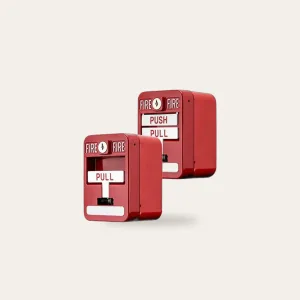
Every system also needs manual call points at the exits, so the first person to see a fire can raise the alarm at once.
Testing
Detectors must be tested regularly, each one, with the right tool. Smoke detectors are tested with a smoke tester aerosol on a pole, which puts the detector into alarm without a flame and leaves no residue. Heat detectors are tested with a heat tool. Write every test in the logbook.
Not sure whether you need a conventional or addressable panel? Read Fire Alarm System: Addressable or Conventional?
Common questions
Can I use a smoke detector in the kitchen?
Not right in the kitchen: cooking smoke and steam will set it off. Use a rate-of-rise heat detector there and a smoke detector in the corridor outside.
What temperature heat detector should I choose?
Pick the lowest rating that stays above the normal maximum temperature of the room. 57 °C suits most rooms; hotter rooms such as boiler rooms need 79 or 93 °C.
How far can a beam detector reach?
Up to 100 m on some models. The actual range depends on the model and on the room.
How do you test a smoke detector?
With a smoke tester aerosol sprayed into the detector, usually from a pole. The detector should go into alarm within seconds.
Recommended products from our stock
These are the products this guide talks about, delivered all over Bangladesh. For items without a price, send us the quantity and we will reply on the same working day.