Bangladesh has frequent thunderstorms, especially in the months before and during the monsoon. A lightning strike on an unprotected building can crack concrete, start a fire, and send a surge through the wiring that destroys equipment. A lightning protection system gives the strike a safe path to the ground.
Short answer: tall, exposed and important buildings need an external lightning protection system (air terminals, down conductors and earthing) and surge protection on the electrical system.
Which buildings need it
- High-rise apartment and office buildings.
- Factories, warehouses and large sheds.
- Telecom towers, substations and water towers.
- Schools, hospitals and places where many people gather.
- Buildings that store fuel, chemicals or explosive dust.
- Any building that stands taller than those around it, or on open ground.
Your building’s design will say what protection is required. If it was built without it, an engineer can assess the risk.
How the system works
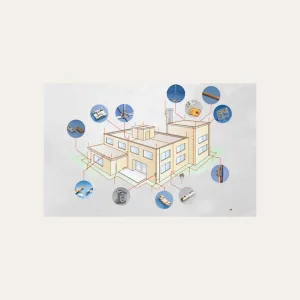
A lightning protection system has three parts that work together:
- Air terminals on the roof, at the highest points and edges, receive the strike.
- Down conductors carry the current down the outside of the building, by the shortest safe route.
- Earth electrodes spread the current into the ground.
The parts are joined with proper clamps, so the current has a continuous path with no weak joint.
 Lightning Protection SystemPrice on requestGet a price
Surge protection
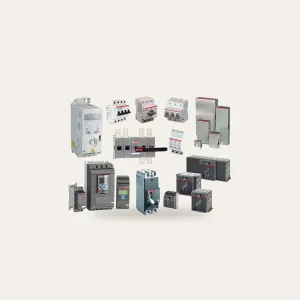
The external system protects the structure. It does not stop a surge from coming in on the power, telephone or data cables. Surge protection devices (SPDs) in the distribution boards send that surge to earth before it reaches equipment. For a building with computers, a fire alarm, CCTV and lifts, SPDs are as important as the air terminals.
Earthing
A good earth is the base of the whole system. Earth resistance depends on the soil and the moisture in it. After installation, the earth resistance is measured, and the result is written down so later tests can be compared.
Inspection and maintenance
- Inspect the system regularly, and after any known strike.
- Look for loose fixings, broken or stolen conductors, and corroded clamps.
- Test the earth resistance and compare it with earlier results.
- Check that new roof equipment (water tanks, antennas, solar panels) is bonded into the system.
What to send us for a quote
Send the building’s height, roof plan and use, and the protection class your design asks for if you know it. We quote the air terminals, conductors, earthing and surge protection, and our team can install the system on request. See also electrical and power equipment.
Common questions
Does lightning protection stop lightning from striking?
No. It gives the strike a safe path to the ground, so the building and the people inside are protected.
Do I need surge protection as well?
Yes. The external system protects the structure; surge protection devices protect the wiring and equipment inside.
How often should the system be inspected?
Regularly, and after any strike. Test the earth resistance and check every joint and fixing.
Can you install lightning protection?
Yes, on request. Send us the building details for a quotation.
Recommended products from our stock
These are the products this guide talks about, delivered all over Bangladesh. For items without a price, send us the quantity and we will reply on the same working day.