A generator that is too small trips or struggles when the lift or the pump starts. One that is too large costs more to buy and runs inefficiently on light load. Getting the size right starts with a simple list.
Short answer: list everything that must run during a power cut, add up the power, allow extra for motors that draw more current when they start, and leave some margin for growth. Generators are rated in kVA.
Step 1: decide what must run
You may not need to run everything during load shedding. Decide which loads are essential:
- Lights and fans in key areas.
- Lifts and water pumps in apartment buildings.
- Fire pumps, the fire alarm and emergency lighting.
- Computers, servers, CCTV and the network.
- Production machines, compressors and air conditioning in a factory or office.
Step 2: list the power of each load
Find the power (in watts or kW) on each machine’s nameplate, and how many of each will run at the same time. Add them up. Not everything runs at once, so be realistic, but do not leave out anything that will run together.
Step 3: kW and kVA
Machines are rated in kW, the real power they use. Generators are rated in kVA. The two are linked by the power factor. Generators are commonly rated at a power factor of 0.8, which means a generator’s kW rating is about 80% of its kVA rating. So a load of 80 kW needs at least a 100 kVA generator before any margin.
Step 4: allow for starting motors
Motors in lifts, pumps, compressors and air conditioners draw several times their running current for a moment when they start. If two large motors start together, the generator must handle that surge. Starting large motors one after another, or using soft starters, keeps the generator size down. Tell us the largest motor and how it starts.
Step 5: leave room for growth
Add a margin for new loads you expect in the next few years. A generator should not run at its full rating all the time.
Other things to decide
- Single or three phase: most buildings and factories need three phase.
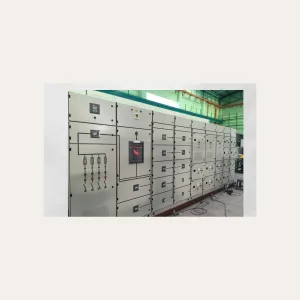
- Automatic start: an AMF (automatic mains failure) panel starts the generator by itself and switches back when the mains returns.
- Canopy: a sound-attenuated canopy cuts the noise in residential areas.
- Place and ventilation: the generator needs air, a fuel supply and an exhaust away from windows.
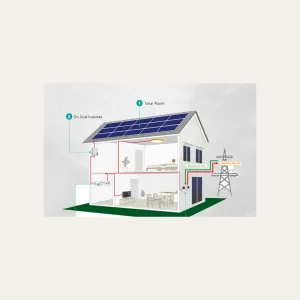
- Solar: a solar power system can cut fuel use for daytime loads.
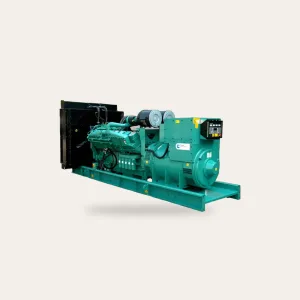 Diesel GeneratorPrice on requestGet a price
Send us your list
Send the list of loads, the largest motors, and whether you need automatic start and a canopy. We suggest the size in kVA and send a written quotation. Our team can install the generator and its changeover on request.
Common questions
What size generator does an apartment building need?
It depends on the lifts, water pumps, common lighting and how many flats are on backup. Send us the list, and we suggest a size.
What is the difference between kVA and kW?
kW is the real power the load uses. kVA is the generator’s rating. At a power factor of 0.8, a generator delivers about 0.8 kW for each kVA.
Can a generator start by itself during load shedding?
Yes, with an AMF panel.
Is a bigger generator always better?
No. An oversized generator costs more and runs inefficiently on light load. Size it to your real loads with a sensible margin.
Recommended products from our stock
These are the products this guide talks about, delivered all over Bangladesh. For items without a price, send us the quantity and we will reply on the same working day.