Electrical faults are one of the most common causes of fires in Bangladesh, in homes, shops and factories alike. The circuit breaker is the part meant to stop a fault before it becomes a fire. It can only do that if it is the right breaker, with the right rating, in a board that is looked after.
Short answer: MCBs protect small final circuits such as lights and sockets, up to 125 A. MCCBs protect bigger feeders and machines, up to 1,600 A, and their trip settings can be adjusted. Never fix a tripping breaker by fitting a bigger one.
What a breaker actually does
A circuit breaker trips for two reasons. An overload is more current than the cable is made for, for longer than it can stand. The cable heats up slowly, and so does the breaker’s thermal trip. A short circuit is a sudden huge current from a fault, and the magnetic trip opens in a fraction of a second. Both protect the cable. The breaker’s rating has to suit the cable it protects, not the load someone wishes to plug in.
MCB: miniature circuit breaker
- 6 to 125 A, breaking capacity typically 6 to 10 kA.
- Fixed trip settings.
- For final circuits: lighting, sockets, air conditioners, small motors.
- Found in the sub-distribution board on each floor or in each flat.
MCCB: moulded case circuit breaker
- 16 to 1,600 A, breaking capacity up to 50 kA.
- Adjustable trips, thermal-magnetic or electronic.
- For feeders to floors and sub-boards, large machines, chillers, lifts and pumps.
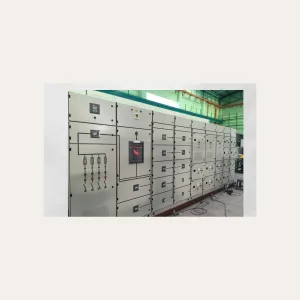
- Found in the main distribution board and large sub-boards.
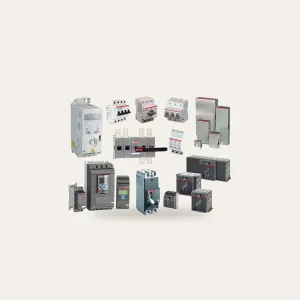 MCB and MCCB Circuit BreakersPrice on requestGet a price
Choosing the right one
- Current rating: no higher than the cable can carry, and above the normal load.
- Breaking capacity: at least the fault current possible at that point. Close to the transformer it is much higher than at the end of a long cable. Your electrical engineer calculates it.
- Trip curve (for MCBs): B for lighting and general sockets, C for normal mixed loads, D for motors and transformers with high starting current.
- Discrimination: a fault on one floor should trip that floor’s breaker, not the main one that blacks out the whole building. Breakers are chosen in steps so this happens.
Warning signs in a distribution board
- A breaker that trips again and again.
- Warm or discoloured breakers, busbars or cable ends.
- A smell of hot plastic, or crackling sounds.
- Extra cables pushed into the same terminal, or joints wrapped in tape.
- Dust, cobwebs and stored items inside or in front of the board.
Most electrical fires start at a loose connection, not in the middle of a cable. A loose joint heats up a little more every day until the insulation burns. Having the boards tightened and checked once a year, ideally with a thermal camera, catches this early.
If a board does catch fire
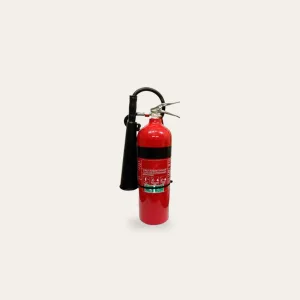
Switch off the supply upstream if you can do so safely. Use a CO2 extinguisher. It does not conduct electricity and leaves no residue. Never use water on a live board. A fire ball mounted inside or above the board gives protection when nobody is there.
Common questions
What is the main difference between an MCB and an MCCB?
Size and adjustability. MCBs go up to 125 A with fixed trips, for final circuits. MCCBs go up to 1,600 A with adjustable trips, for feeders and large machines.
My breaker keeps tripping. Can I fit a bigger one?
No. The breaker protects the cable. A bigger breaker lets the cable overheat, which is how many electrical fires start. Find the cause: too much load on one circuit, a faulty appliance or damaged wiring.
Which trip curve should I use?
Type B for lighting and general sockets, Type C for most mixed commercial loads, Type D for motors and transformers with high starting current.
Do MCBs protect against electric shock?
Not on their own. Protection against shock needs a residual current device (RCD or RCCB), which trips on small leakage currents to earth. Ask your electrician to include them.
Recommended products from our stock
These are the products this guide talks about, delivered all over Bangladesh. For items without a price, send us the quantity and we will reply on the same working day.