A fire hydrant system brings water to every floor of a building, so trained staff and fire fighters can fight a fire with a hose without running hoses up the stairs from the street. In most multi-storey buildings in Bangladesh, it is one of the main parts of the fire fighting system, alongside sprinklers.
Short answer: a hydrant system is a water tank, fire pumps, a vertical pipe (the riser) through the building, and a landing valve with a hose cabinet on each floor.
The parts of the system
Water and pumps
The system draws from a fire water tank, often underground, through fire pumps. A jockey pump keeps the pipes full and under pressure, the main pump starts when the pressure falls, and a diesel pump stands by for power cuts. Our fire pump guide explains the pump set.
The riser
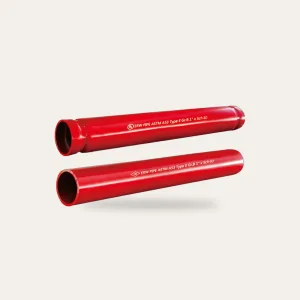
The riser is a large pipe that runs up the building, usually in or next to a stairwell. In a wet riser, it is always full of water under pressure. It is built with MS pipe and fittings, with isolating valves so sections can be serviced.
Landing valves
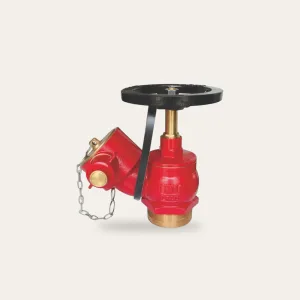
On each floor, a landing valve on the riser is the outlet where a hose is connected. It is opened by a hand wheel to control the flow.
 Landing ValvePrice on requestGet a price
Hose cabinets
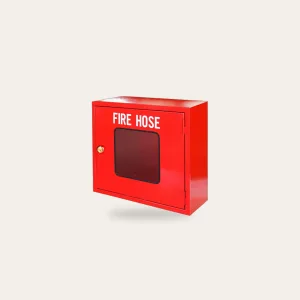
A hose cabinet next to the landing valve keeps the hose and nozzle ready. Many cabinets also hold a hose reel, which one person can use on a small fire before the fire service arrives.
Pressure control
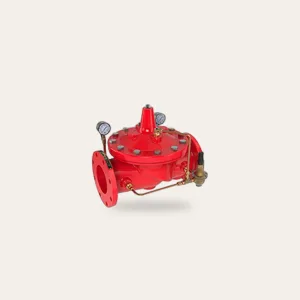
In tall buildings, the pressure needed to reach the top floor is too high for the lower floors. Pressure reducing valves bring it down to a safe level there.
Hydrants and sprinklers
Sprinklers work by themselves, opening in the heat over a fire. Hydrants need people to use them. Most large buildings need both: sprinklers to control a fire early, and hydrants for fire fighting. See Fire Sprinkler System: How It Works.
Keeping it ready
- Keep hose cabinets closed and clear of goods, with no lock or with break-glass access.
- Check monthly that each cabinet has its hose and nozzle, and that nothing is damaged.
- Check the system pressure on the gauges, and run the pumps on schedule.
- Keep isolating valves open, and check them during maintenance.
- Flow-test landing valves during annual maintenance, so they do not seize.
- Train the people on each floor to use the hose reel.
What to send us for a quote
Send the drawings or the equipment schedule: the number of floors, landing valves, hose cabinets, and pipe sizes and lengths. We quote the valves, cabinets, pipe and fittings together, and our team can install the system on request. See all sprinklers, valves and pipework.
Common questions
What is the difference between a wet riser and a dry riser?
A wet riser is always full of water from the building’s pumps. A dry riser is empty until fire fighters pump water into it from outside.
How many landing valves does a building need?
Usually at least one on each floor at each riser. Your fire safety design sets the number and positions.
Can staff use the hydrant hose?
Trained staff can use the hose reel on a small fire. The larger hose is mainly for fire fighters.
Do you supply complete hydrant systems?
We supply the valves, cabinets, pipe and fittings, and can install the system on request.
Recommended products from our stock
These are the products this guide talks about, delivered all over Bangladesh. For items without a price, send us the quantity and we will reply on the same working day.